A Morbid Parody of Justice opens with ‘Pornocratia’; a slow methodical melodic track that carries itself like a warm wind drifting across Spanish plateaus. A sombre trombone adds an element of Western Movie stand-off that subtlety gives the Iberian breeze greater gusto.
Words for all intents identical to those used when reviewing Warrior Pope’s Papal Bull-Shit: Live at the Louisiana; except there it was a song played as a greater part of a live set, whereas here it finds its true home as opener to Warrior Pope’s delve into one of the most bizarre and dark moments in Papal history.
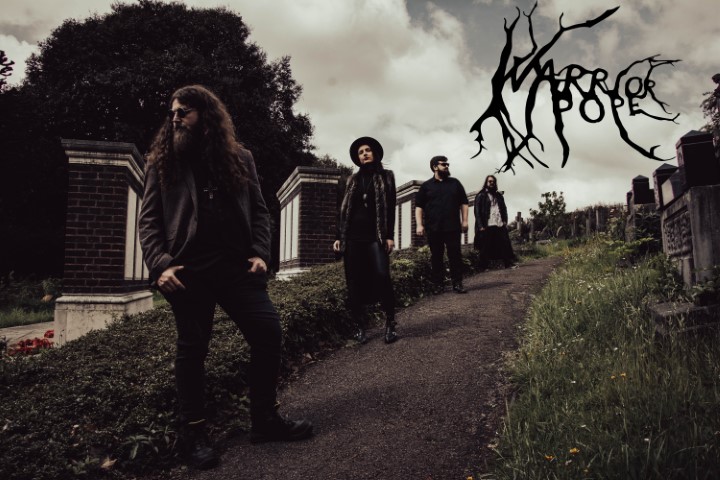
Warrior Pope team photo left to right: Dan Burke; Katya; Jack Andrews; Oli Foxen. Photo by @JamesFenwickPhotography
Tormented vocals sear across a backdrop of plunging music; the harrowing trombone solo matches the chill events that took place: ‘Despoiling a Cloisters’ broods like the dark stain a synod of 897 AD remains in the pages of Papal history.
Oh yes, there are plenty of ominous moments of Catholic-related activity soiling many of those historical pages; plenty indeed! But the number that was considered official Papal business carried out directly by a Pope?
Not so many.
The overall period was a turbulent one for the Papacy: the years between 872 and 965 saw twenty-four Popes, with pretty much yearly changes from 896 to 904; a period, then, seemingly having far more in common with the paganism found in J. G. Frazer’s The Golden Bough—the first comparative study of religion, published 1890—than the high and lofty aspirations of those original Christians who’d condemned to damnation all of that sort of thing by Romanticising the Hell out of it.
‘Twenty-Four Popes Later’ is a track of monumental rock ‘n’ roll proportions: groovy, grinding, driving; a thoroughly infectious rhythm and energy explodes from each member of the band as a delicious slab of audio mayhem rampages its way to being over too soon at a mere minute. A sharp and abstract take on the moment in history: looking back seeming nothing but a chaotic flash in time; but for those in the actuality of the moment, bristling with intricate intrigue much as the music here brims with detailed accomplishment despite the track’s short length.
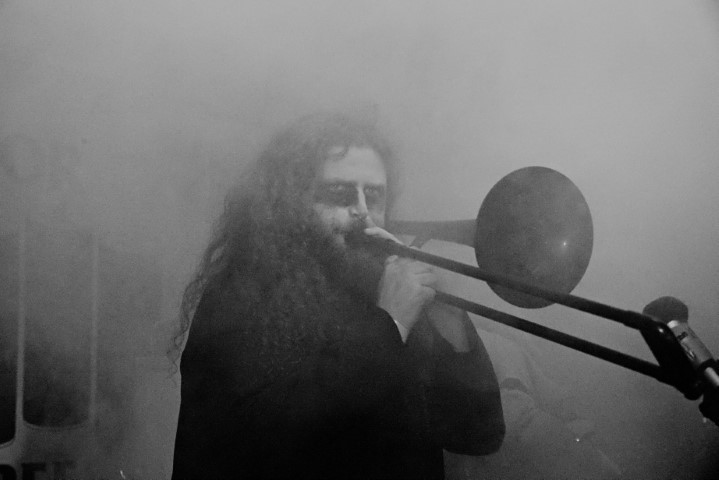
David Burke by @Skywinophotography
‘Bishop’s Take’ is a feed-back infused dark buzz over which the spoken word of none other than Professor Mike Bishop of Kepone and GWAR tells the story of the synod of 897.
The ‘known world’ was still very much divided on Roman Imperial lines, the Holy Roman—modern day Germany for all intents—and Byzantine Empires still very much alive and kicking: the former relying on the Pope to crown its Emperors; the choosing of often decided by whomever turned up in Rome with the biggest army; a way of setting things so favoured by the kings and nobles of the time that Pope Urban II is known to have counted the stopping of Christians spilling fellow Christians’ blood amongst his reasons for launching the First Crusade in 1096.
Anguished, tormented vocals wind their way across a landscape of powerful, precise drums; the bass sounds philosophical in movement; a guitar solo rises to stand alone while somehow simultaneously revealing the succulent melody that’s been underpinning track ‘Condemnations of Formosus’ all along.
In 875 a bishop named Formosus fled Rome in fear of Pope John VIII; it turned out with good reason. Formosus went to Porto-Santa Rufina, where he was bishop, thinking he’d be far enough out of the way there, only for John VIII to follow. Having caught-up with Formosus, Pope John VIII made a number of accusations; the crux of which being that Formosus had used an official trip to Bulgaria to rally everyone there behind him personally as opposed to the Church in general.
Formosus was excommunicated.
John VIII’s death in 882 resulted in such seismic changes in the dynamics of Rome that Formosus found himself not merely un-excommunicated, but more so reinstated to his previous position as Bishop of Porto-Santa Rufina. There he remained until he was made Pope in 981; an utterly incredible turnaround even for the tumultuous times.
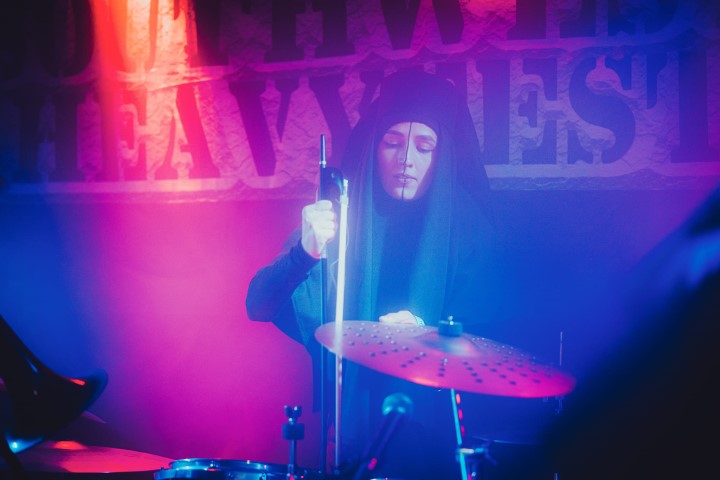
Katya by @ConnorStandfieldPhotography
Riots engulfed Rome when Formosus’ Papacy ended in 896. His successor, Pope Boniface VI—known to be cruelly vindictive—was quickly appointed, possibly to be the iron fist more than willing to quash the civil unrest; whatever the reasoning, Boniface VI proved hugely unpopular, his Papacy ending a mere fifteen days later. Though historians are divided on whether this was due to dying from gout or being chased out of Rome by the following Pope, Stephen VI.
Either way, there is no doubt regarding the events of the synod Pope Stephen VI instigated seven months later.
Stephen VI still had it in for Formosus—possibly due to who he’d put in charge of the Holy Roman Empire—and raised against him the same charges as John VIII had, plus more relating to his returning to Church work—actually becoming Pope, no less—despite allegedly promising not to when becoming un-excommunicated.
Unlike the last time, when John VIII had sought Formosus out in his see of Porto-Santa Rufina, Pope Stephen VI had Formosus brought to him and the synod conducted at the Basilica of St. John Lateran in Vatican City.
Formosus infamously made absolutely no protest about this latest turn of events, going along with those sent to collect him without a word of objection. He’d been dead for seven months at the time; his Papacy ending for that very reason. This being why the synod of 897 is known as Synodus Horrenda; or in English as the Cadaver Synod or Cadaver Trial.
‘Experience Severing’ is a pulsating instrumental rising in crescendo before driving and diving forward into a mostly high-end feedback melee that represents the grisly events so perfectly the track is as grimly uncomfortable and unsettling to listen to as they would’ve been to watch.
That it was Formosus’ decomposing body that sat on trial was no obstacle to Pope Stephen VI: he simply appointed a deacon to answer on the cadaver’s behalf; and given everything else going on, said deacon was hardly likely to give an answer not fitting with Stephen VI’s agenda.
The dead body’s Papal vestments—gowns and robes—were removed, and three fingers of its right hand were hacked off; these being the ones used for blessings, the removal therefore making all of Formosus’ decrees and ordinations invalid.
The cutting was allegedly done by Pope Stephen VI himself.
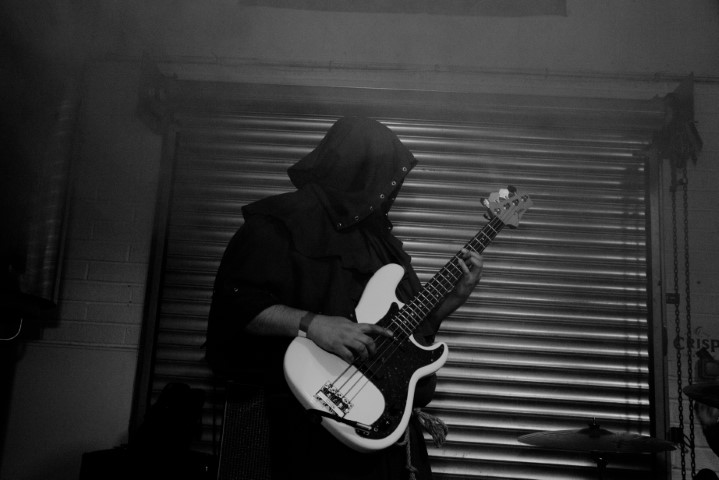
Oli Foxen by @Skywinophotography
Who was there not simply watching the macabre spectacle, but by being so acting as ‘enabler’ too: voyeurs of this gruesome act ludicrously attributed so much grand importance? The exact audience is unknown; but the grimace of disgust to be found gripping anyone present with a shred of decency can be felt, is somehow miraculously captured in the music here like breaths captured at the moment of the very first slice.
Even as someone with a relatively keen interest in history I’d never heard of the Cadaver Synod. The above was written with the context of the story, but before looking back at what I’d said about ‘Strangled Legacy’ in the review for Papal Bull-Shit: Live at the Louisiana.
With context absurd actions are seen to be held in the highest esteem; while without–below (from the earlier review)–the spirit of the track still managed to shine through, something that for me absolutely punctuates what an incredibly sophisticated album A Morbid Parody of Justice is:
“The mellow feel of ‘Strangled Legacy’ is perfect opportunity to bask in how accomplished the musicianship: the detail in the percussion alone thoroughly captivating; while the pained and tormented requiem-esque vocals remind of all the elements witnessed in the performance, the complete tapestry they fulfil to encompass the condition of life without pretension for life can be absurd even in the most serious moments; something a solemn trombone floating over a sound of such crushing precision and driving purpose can somehow conversely ensure can’t be forgotten.”
Initially Formosus was reburied in a common grave for foreigners, something apparently considered about as demeaning as it could get. But even that wasn’t enough for Pope Stephen VI, who had Formosus exhumed for the second time in his death, though on this occasion the rotting body was tossed in the Tiber River instead of being put on trial.
Formosus in the Tiber beneath fishing nets: a moment in the story stunningly recreated by Normal Gergely for the album cover art; the cadaver even missing its three ordaining fingers.
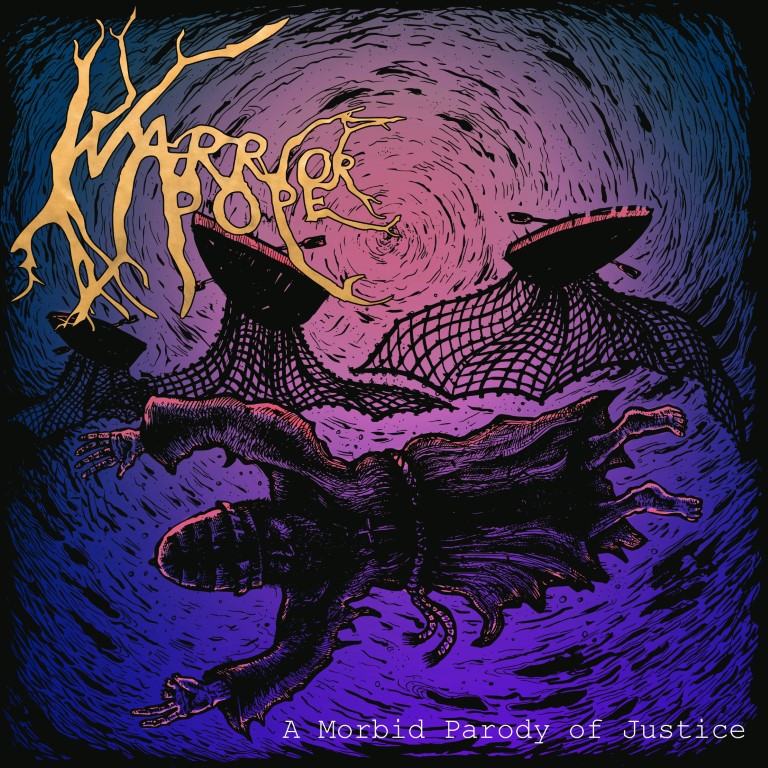
Unfortunately for Stephen VI, Formosus’ decaying corpse didn’t simply sink to watery depths but instead washed up on the river’s shores, where it was said to still be performing miracles. A historian born 920, Liutprand of Cremona, wrote of Formosus’ dip in the river:
“When he was afterwards found by fishermen and carried to the Church of the blessed Prince of the Apostles, certain images of the saints, with veneration, saluted him, placed in his coffin; for this I have very often heard from most religious men of the city of Rome.”
‘Rotten Sun’ rolls into the album full of fat juicy riffs ripe with emotional energy, a doom ballad that delves ever deeper, creating wave after wave of never ceasing soundgasm. A Morbid Parody of Justice was recorded in the band’s rehearsal live room and it shows with a heat that can be felt even in the spaces without sound.
The whole event turned public opinion fully against Stephen VI; a public uprising saw him imprisoned where he was strangled to death later the same year.
By December 897, the latest Pope, Theodore II, held a synod to annul all the charges against Formosus; whose body, by then rescued from the Tiber, was buried in Saint Peter’s Basilica, vestments returned (meaning someone got the job of dressing the highly decomposed and waterlogged remains!). The following year saw another new Pope, John IX, not hold just one but two synods to nullify the charges against Formosus, in the process having seven Cardinals involved with the Synodus Horrenda excommunicated and ordering its acta destroyed.
And that, one might think or even hope, would be the end of it; and it certainly would be if one went no further than Wikipedia, but Sergius III, who became Pope in 904, held a synod to reaffirm the original Synodus Horrenda – his motivation for doing so perhaps found in the fact he’d been a judge at it! Sergius also went after any Bishops consecrated by Formosus, something that then annulled all the blessings they’d done too and so the confusion, chaos and scheming . . .
Jack Andrews by @ConnorStandfieldPhotography
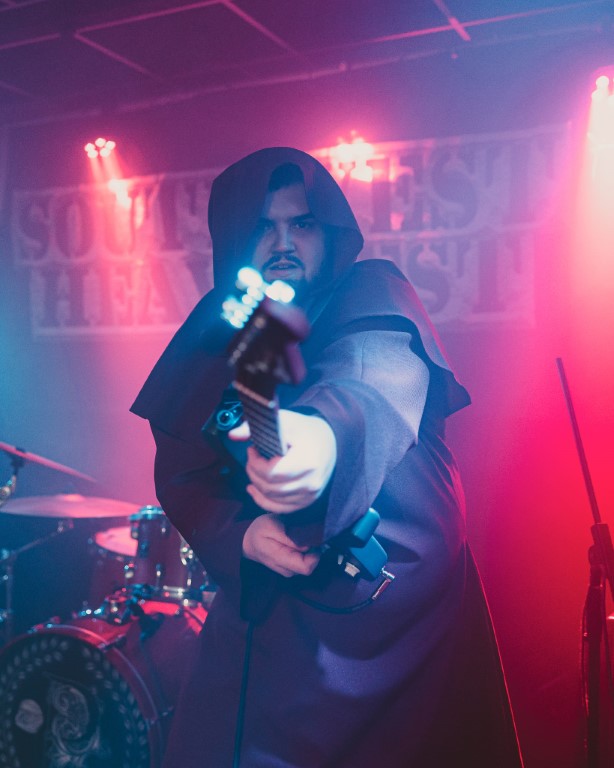
‘The Method’ concludes the album with a coming together that might be called hardcore or post metal, but frankly is far better described as heavy metal on crack with Elvis on more crack on vocals. It runs like a relentless pursuer pounding in its chase, refusing to let its prey hide in the murky forgotten shadows of the past; instead digging up again to put on trial not just one pope, but the whole stinking decaying lot involved in the sorry affair.
A Morbid Parody of Justice is Warrior Pope’s telling of this bizarre and macabre moment in Papal history. It is without doubt the most intriguing concept album I’ve ever heard, and in its delivery could easily be considered as stretching into the ‘rock opera’ area of that realm.
There’s a magnitude here never before encountered: the album so powerful it shakes centuries old mediaeval dust particles back up from the earth into living and deceased form, gives mouth-to-mouth to the odious odours, regrinds gritted teeth, rekindles eyes of evil searching for nervous glances, revives the slicing blade . . .
In 1870, Jean Paul Laurens painted the scene in Le Pape Formose et Etienne VI. I was going to include the image here, it being out of copyright now after all, but in consideration realise to do so could only serve to taint what A Morbid Parody of Justice conjures in the mind via the medium of crushing precise sound.
A Morbid Parody of Justice is set for release circa 30th May 2025 AD.
Warrior Pope:
- Oli Foxen – bass
- Katya – drums, bowed cymbal
- Jack Andrews – guitar, noise
- David Burke – vocals, trombone
Additional:
- Professor Michael Bishop – spoken word on ‘Bishop’s Take’ and ‘Condemnations of Formosus’
- Mark Roscow – engineering, mixing, production
- @VogonLaundromat – review header image
Links:
* * *
If digging what you’re reading / hearing and would like to help new and independent artists reach a wider audience, please remember sharing is caring and the more you share the more you care xxx
(sharing icons located bottom of page)
* * *
Thanks for reading 🙂
N. P. Ryan
To receive notifications of future posts of poetry—be they happy, sarcastic or sad—music history and reviews, the odd bit of this and that plus the occasional stab at promoting my books, please enter an email address below.
 N. P. Ryan