 No Time Like The Present opens with upbeat foot-tapper ‘The Hat’; a story of gigging here, there and everywhere told in a cheeky Ian Drury-esque vein; smiling through not simply the trials of life but more so the death sentence of using Ryanair and then laughing riotously about it all with new best friends for life who’ll only be so for the night of a show. Not only lyrically, the vibe is caught in the music too; a feel of looking out of a car window at a never before seen fields, tired and thinking of the previous night while heading down a new stretch of motorway equally energized about the potentially likewise one to come.
‘Road Trip’ continues the theme of travel, though for different reasons; needing to clear one’s head only to still see the person warranting the trip in every recess of it. A sombre elegance in the tune conveys the lyrical theme superbly, holding love and devotion to account for the devastating mixed-bag of emotions they can leave in their awkward/messy spilt-up wake; for as it leisurely weaves and winds its way to a warm lazy wind conclusion, caught in the breeze is the thought the reoccurring face might not have been the worst thing in the world after all.
 ‘I Like’ is an exquisite number with the power to bring tears to the eyes—and rolling out of them too tbf—for the tenderness conveyed in a message that could be felt as rejection when instead the intent is to gently convey the need to do many things alone in the name of retaining one’s sanity, the potential blow of this majestically softened towards the end of the song when immense value is still given the other for just the simplest connection; the power of this sentiment so sweetly converse for it’s found in its softness. Every part of the music is alive with the passion of the lyrics, cohesion and harmony rolling in as the sun breaking for the start of a new day.
Here a couple of similarities with other artists jump out: something in the composition reminds of The Beatles, the deep sense of sentiment found in ‘Strawberry Fields’; while the other is a feel somewhat reminiscent of ‘Rainy Days and Mondays’ by The Carpenters, a similarity in the way Zora’s vocals are delivered.
‘The Girl From London’ has a bittersweet tone; it could be danced to with a smile or form the wistful look on a face staring out of a window overlooking the sea. A story of leaving London that initially rings some bells for me with mention of crowded, stifling streets, but soon delves deeply into the harrowing—something made all the more so by the thought of everything going before feeling firmly rooted in experience and truth—with trauma, loss and self harm.
 The only sadness found in ‘Pass It On’ is its being the last track of the EP, something it somehow manages to carry in its upbeat positive outlook; as though being consequence of all that’s gone before combining with a knowledge for reaching the end not so much of the journey but these particular chapters within it. Life starting so carefree before descending into the inevitable cluster-fuck collisions with others and the curve-balls the Fates can throw only to emerge the other end with the strength to still be full of optimism for the future.
Thinking of that already written, I can’t help but feel the music hasn’t been mentioned directly enough. While Dryadic is the creation of lyricist/musician Zora McDonald, the ensemble of talent involved in creating the final product is extensive:
- Vocals, Guitar, Piano – Zora McDonald
- Violin, Guitar – Jo ‘Owl Hands’ Dziecielska
- Backing Vocals – Paul Diello
- Bass – Alfie ‘Lord of the 7 Kingdoms’ Weedon
- Drums – William Woodfine
- Harmonica – Cosmo
- Gang Vocals – Zora McDonald, Joanna Dziecelska, Paul Diello, Alfie Weedon, William Woodfine, Cosmo, Jilly Jelly, Jake Skinner, Corinne McDonald, Marian Phillips, Rosie
- Produced by Dryadic and Jake Skinner Productions; the latter also responsible for engineering too.
There’s no escaping the fact it’s the vocals and their content illuminating the way with a shining edge of defiance: a refusal to be bowed despite how hard the crushing waves; the courage to continue with a smile in the face of seemingly mountainous obstacles.
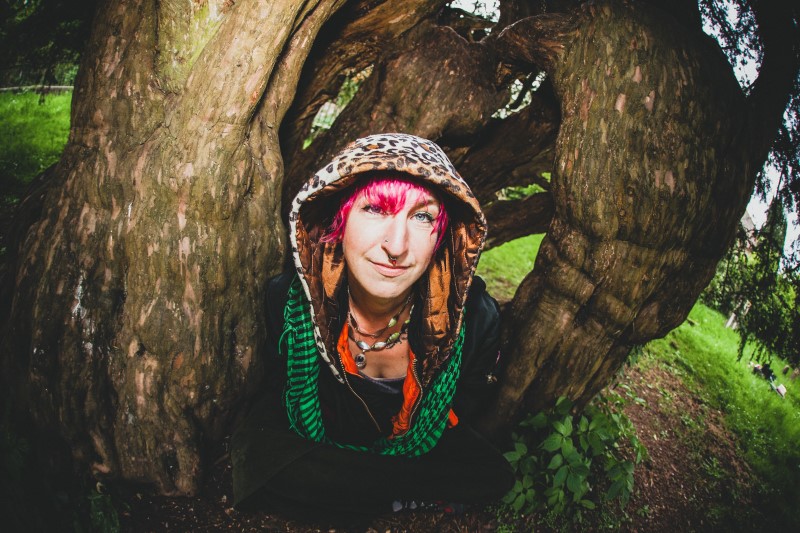
While that might sound like the music is left in the vocals’ wake, what actually happens is something magical. Highly competent in all aspects, the music carries an elegance that makes it perfect accompaniment for the message in the lyrics regardless of song playing. There’s a synergy that leaves no instrument standing above the rest while equally by the end of the EP there’s absolutely no doubt each has been fully heard. And such is that harmony with the lyrics it feels certain the sentiment and meaning of the words would still be conveyed even if they weren’t there.
It’s a quality that I initially thought comparable to some of the best Musical scores before realising that actually this is much better. There’s also a feel that each song has the patience to reach a natural conclusion musically; something that adds a sense of being deeply rooted in life.
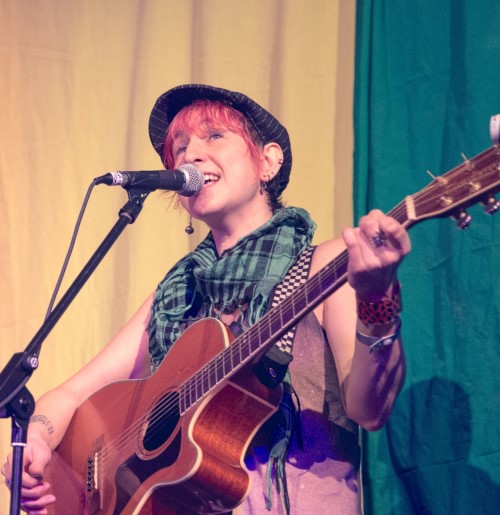 As for the lyrics, Zora told me they are indeed autobiographical: ‘The Hat’ written from a coach seat looking out at the fields while travelling between shows in 2019 when participating in a street festival tour of Poland called the Buskerbus (video below). Though aspects can be taken from the experiences of family members such as some moments in ‘The Girl From London’ involving self-harm a result of poor mental health; a subject that Zora doesn’t think gets anywhere near enough attention.
Primarily a lyricist over a musician—Zora studied song writing at post grad level—Zora has recently gigged with poets as the audience is there for the words; and being a lover of poetry too, Zora is ever move involved in the growing LGBTQ spoken word movement.
Musically though the path hasn’t been so straightforward.
‘I don’t have a distinct place in the music industry. Music mirrors personality and one must find their space: over the years I spent a lot of social time in squats, at warehouse parties and punk festivals. The party bands on that scene really helped me get out of a rut I was stuck in of only writing sad love/angry protest song: great for getting negative stuff out, but perhaps not so for an overall vibe musically. I started to really challenge myself to write positive lyrics; something that after a lot of hard work comes easily now. My music, though, can be a little too commercial for that scene: not quite traditional folk, party, punk or ska; while it certainly isn’t pop and I’m too alternative/queer for commercial purposes.
‘As time ebbs on being queer and older you really have to get people with the music; the transaction between artist and audience has to be all about the sound. Women become less visible. It made me more aware of the patriarchy in the music industry: a hard realisation that it was the problem and not a personal lack of confidence/self-esteem that led to thinking one wasn’t good enough to achieve the same traction as other artists; though conversely the only way it seemed possible to not feel victim of the patriarchy was try to ignore it, which meant blaming any perceived failings and shortcomings on the self so eating away at one’s confidence further. Having got my head round it, I now do all possible to actively oppose its existence.’
It can be a hard thing to get the head around; it’s impossible not to conclude that the patriarchy would have to be someway if not entirely responsible for any lack of self-esteem in the first place.
A story sticking in my mind is one told me by a female lead guitarist who having walked into a music store to buy some new strings and requesting the ones they wanted was asked by the male behind the counter what guitar their boyfriend had. No particular incident stands out for Zora, who said it’s difficult to define something taking place all the time everyday everywhere: mansplaining frequently manifesting at venues in the form of male staff thinking a question to find out where something is kept from a woman translates to how does it work/I don’t know what I’m doing; bands with loud ‘laddy’ males get better gigs, are positioned higher in line-ups; festivals are rarely fronted by women; all/predominately women audiences are far more receptive of the message – as a rule men aren’t interested in what queer women want to convey.
For someone like me, a white heterosexual—one that hasn’t been convinced otherwise so far, at least—male, who doesn’t give a monkey’s what anyone else is, it might be easy to not get it. Writing books on the subject of religion’s origins, though, the patriarchy is utterly impossible to miss. The Greek plays shaped Greek thinking, were considered representative of reality not taken as the trauma-hiding myths they are; and in turn the attitudes played a roll in shaping the philosophies that still underpin—rarely rightly, so often wrongly—Western laws, ideals and mindsets today.
If there’s one moment that captures the start of toxic masculinity trying to establish itself as moral and right, in effect establish it in law, the turd sticking its misogynistic head out of the patriarchal sewer higher than any other is for me found in The Oresteia, a trilogy of plays dated 458 BC and credited to Aeschylus.
In it, the god Apollo emphasises it’s the truth he speaks when saying that a woman called mother isn’t the parent of a child, but just a harbour to the seed growing inside; that Man is life’s source; he who mounts.
The lyrics to ‘I Like’ speak volumes on the subject, capturing much of the frustration Zora spoke of. It doesn’t matter how much one loves someone, it’s not healthy to be with them 24/7; we not only need alone time but time with others on our own too. The words are gentle; a soft assertion of the self in reply to someone else’s insecurities. Among the list of straightforward yet deeply soul-satisfying things to do is the assertion of despising the feeling of being tied down. And then, slipped in without fuss or fanfare towards the end, are the words:
“I like it when you go to hold my hand.”
This solitary line is the only reassurance offered the other party: on the surface it’s a subtle as any over aspect of the song, but in consideration is far more powerful for giving the lead in the scenario to them.

Think of the average bloke and the message is definitely directed at a woman. To be loved in what he considers an appropriate way said bloke needs all attention on him all of the time and total control over it too otherwise any declaration of devotion can hardly be worth the breath it’s spoken with. As for the act of holding hands, the average is hardly going to see depth in subtlety especially when so far removed from action and accolades in the bedroom.
The self-entitled mindset does not concern itself with the needs of others. It doesn’t need to. Love is never freely or truly given by the oppressed; they can never be their best and surely one would want that for and from the person they proclaim to love and want to spend their lives with: a point underpinning what it considered by many the first work of feminist literature A Vindication of the Rights of Woman, Mary Wollstonecraft, 1792.
And yet here we still are, the mindset so ingrained some men don’t even realise they’re doing it and still can’t fathom they are and how even when it’s painstakingly explained. So bad is it even some women perpetuate misogynistic views without the first clue they are. It’s as though they think all of this is very much some preordained scenario bestowed from above.
Those of said mindset will never understand or feel the value of that line: entitlement equals lack of enough (or any) empathy; the need to always be right denies the necessary composure to contemplate. I can write these things about the patriarchy like they are fact without anyway to prove them definitively and still know them to be exactly that.
True, then, that Zora’s message will only resonate with the few; and, yes, while that does make it immensely special to those few—self included—there’s no ignoring the desire of every artist to be heard and appreciated by as many as possible; perhaps here is where the music comes into its own, for some people need to start the journey to understanding somewhere; and sometimes it can be what could be called an abstract connection—music/visual art—that leads to their first step on the path (take it from someone who knows).
* * *
If digging what you’re reading / hearing and would like to help new and independent artists reach a wider audience, please remember sharing is caring and the more you share the more you care xxx
(sharing icons located bottom of page)
* * *
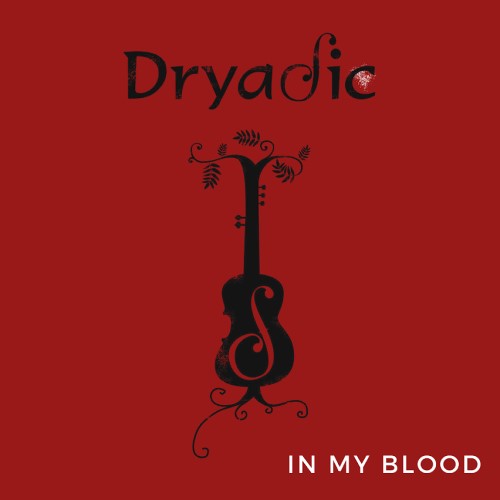 Dryadic is Zora’s latest project having wound up the The Tatsmiths in 2015 to coincide with moving from Brighton to the South West during Lockdown; still in the process of building up connections, Zora is currently on the lookout for a drummer (at the time of publication).
No Time Like The Present is the second release from Dryadic, three track EP In My Blood being the first at the end of 2017.
The utterly compelling warm-as-honey ‘Gongoozling For Two’ from Dryadic’s debut EP In My Blood:
Zora continues to play Tatsmith’s songs live too, something that must make for quite the combination given the genres delved into there, such as the Irish-inspired ‘Lurcher’s Paw’ found on Occupy released 2015.
When speaking we discovered a shared love of dub that comes from living in and spending time around Brixton, South London, so it’s impossible to omit the reggae influence found sprinkled numerous places such as on the also funky ‘Resist’ from 2012’s Curiosity Shop.
My sincere thanks to Zora for taking the time out to chat; an education and absolute pleasure 🙂
Links:
Thanks for reading 🙂
N. P. Ryan
To receive notifications of future posts of poetry—be they happy, sarcastic or sad—music history and reviews, the odd bit of this and that plus the occasional stab at promoting my books, please enter an email address below.
 N. P. Ryan